GeriPal - A Geriatrics and Palliative Medicine Podcast
Alex Smith, Eric Widera 421 episodes Nov 5, 2026
GeriPal is a podcast for health care professionals working in geriatrics, hospice, and palliative care. Hosted by UCSF doctors Eric Widera and Alex Smith, each episode features conversations with leading experts on recently published research, clinical practice, and the controversies that keep practitioners up at night. The tone is informal and often humorous, aiming to make complex topics accessible and engaging. CME and MOC credit (AMA PRA Category 1) are available through the show's website.
Episodes
Geriatrics for the Masses: Rafael Duncan, Ellie Fishbein, Patty Lee, Sam Ing, & Stephanie Rogers
How do we spread the gospel of geriatrics? How do we convince trainees, our fellow clinicians, older adults, and caregivers - heck, everyone - that a geriatrics' knowledge and skills are essential? One way is to reach these audiences via traditional avenues, such as journals and books. Another is to reach them through social media. In today's podcast we are delighted to welcome Rafael Tenorio, E
The Long-Lasting effects of Delirium: Tammy Hshieh, Ed Marcantonio, & Thiago Avelino-Silva
Delirium is probably the single most common issue I see in clinical practice as a palliative care consultant for our hospital's very geriatric population. I would say that only about half the time we are consulted has the team consulting us recognized that the patient has delirium. I would guess that about 25% of the time there is an obvious culprit or set of culprits that lead to resolution of t
How Can We Improve Surgery for Older Adults? Unpacking the ACS Geriatric Surgery Verification Program
In 2019, the American College of Surgeons launched the Geriatric Surgery Verification (GSV) Program to provide evidence-based standards hospitals could adopt to optimize surgical care for older adults. As a surgical resident, I didn't think much about what that meant until I rotated through a GSV-verified hospital and gained firsthand experience. The structure built into the EMR prompted me to go
Can We Prevent Cognitive Decline in Aging? Multi-Domain Trials with Laura Baker and Ellen Binder
Can we prevent age-related cognitive decline, and perhaps even head off Alzheimer's disease and related dementias before they start? Pharmaceutical companies are spending billions searching for a magic bullet pill to answer that question. But what if the solution requires more than a single drug? What if real prevention demands a multi-domain approach that combines targeted diet, exercise, social
When to Start or Stop Statins in Older Adults: Tim Anderson, Rita Redberg, Mike Rich
In 1987, lovastatin became the first FDA-approved statin in the United States. Four decades later, statins are among the most frequently prescribed medications nationwide, with atorvastatin topping the overall list. Now, updated guidelines have expanded statin eligibility to cover nearly every older adult. On today's episode, we are joined by experts Tim Anderson, Rita Redberg, and Mike Rich to di
Hot New Drugs in Palliative Care: Max Stevenson, Alex McPherson, and Nisha Iyer
When you think of palliative care pharmacotherapy, you probably think about the tried-and-true mainstays of our field like morphine, haloperidol, and senna. But the landscape of palliative symptom management is rapidly evolving, with hot new drug classes and rediscovered old-school opioids (and not just buprenorphine!) On today's episode of the GeriPal Podcast, we sit down with three expert pallia
Interactive Maps of Aging: Judy Salerno and Lindsay Goldman
Love the story Judy Solerno tells at the start of this podcast. The story is about how John Snow, the father of modern epidemiology, mapped out cases of Cholera in London in the year 1854. He was able to identify a concentration of cases near a neighborhood water pump. Simply removing the handle from the pump halted the outbreak. This is one of the earliest recorded uses of maps for public heal
Flu, COVID, RSV, & Shingles Vaccines in Older Adults: Ken Schmader and Sharon Brangman
Just in time for respiratory virus season, this episode of the podcast breaks down essential vaccine guidance for older adults. From flu, COVID-19, and RSV to an added bonus deep dive into shingles, we cover everything you need to know to protect older adults this season. Our expert guests include: Kenneth Schmader, MD: A geriatrician and vaccine researcher who helped develop the zoster vaccine.
Financial Mistakes and Exploitation in Dementia: Lauren Nicholas, Duke Han, Jason Karlawish
Difficulty managing money is often one of the earliest signs of Alzheimer's disease and related dementias, frequently appearing years before an official diagnosis. This loss of financial capacity leaves individuals vulnerable to costly mistakes and exploitation, threatening the financial security and quality of life of entire families. In this episode, we sit down with Dr. Lauren Hersch Nicholas,
Weight loss, GLP-1s and Sarcopenia: A Podcast with John Batsis, Shen Dewar, Aruna Josyula
GLP-1 receptor agonists (the "Ozempics of the world") have been a truly revolutionary pharmacological advance in modern medicine. In randomized controlled trials (RCTs), these agents have been shown to do much more than just reduce weight, including significantly reducing cardiovascular events, lowering all-cause mortality in patients with type 2 diabetes, and even slowing the progression of chron
Who Should Palliative Care See? Diane Meier, Bob Arnold, and Justin Sanders
As Diane Meier remarks to start today's podcast, palliative care has come a long way from the days when we were the "brink of death" consult. We're seeing patients earlier and earlier in the course of illness. In fact, the evidence base for specialist palliative care is arguably stronger in the outpatient setting than the inpatient setting. In some ways, as Eric remarked, we are a victim of our
LATE vs Alzheimer's: Biomarkers, Mixed Dementia, and Clinical Realities with Nate Chin & Sterling Johnson
Up until just a couple years ago, an 85-year-old patient presenting with gradual, amnestic memory loss was almost automatically presumed to have Alzheimer's disease. However, new biomakers and the recognition of conditions like Limbic-predominant age-related TDP-43 encephalopathy (LATE) are reshaping our understanding of cognitive decline in older adults. It's looking more clear that pure Alzheime
Video-Enhanced Advance Care Planning: Joshua Lakin and Kei Ouchi
Can simple, evidence-based video decision aids—paired with structured clinician training—improve Advance Care Planning (ACP) documentation and goal-concordant care? That's the question we pose in this week's podcast with Dr. Joshua Lakin and Dr. Kei Ouchi. We break down the methodologies behind two major clinical trials in which they were involved that implemented this video-enhanced approach. The
Longevity Treatments - Snake Oil or Breakthrough? John Newman & Mahtab Jafari
The longevity industry is booming. Influencers are promoting this and that as promoting healthy aging, longevity, and healthspan, and it's hard for us, much less our patients, to make sense of it. To be sure, we should always start by recommending exercise, nutritious foods, good sleep habits, and meaningful social interaction. We wanted to go beyond that to talk about the promise and potential
Who Should Deliver Palliative Care in Liver Disease? Chris Woodrell, Manisha Verma, Marie Bakitas
Who's better at delivering palliative care to patients with liver disease: palliative care specialists, or hepatologists who have received liver disease-specific palliative care training? That's the question we take a deep dive into on this week's podcast by breaking down the PAL-LIVER trial, published this year in JAMA Internal Medicine. We've invited three of the trial's authors, Manisha Verm
Why you should care about the shakeup at NIH: Sean Morrison, Ken Covinsky, Stacy Fischer
Emergency Podcast! Our guests Sean Morrison, Ken Covinsky, and Stacy Fischer believe that you should care deeply about the proposed shakeup at the National Institutes of Health. Major proposed rules changes at the Office of Management and Budget, would affect a huge range of government grants, from Headstart to Transportation to the National Science Foundation, as well as the National Institute
How We Limit Non-beneficial Life Sustaining Treatments: Jason Batten, Liz Dzeng, Teva Brender
Today's podcast is a natural follow up to our podcasts on Slow Codes and Unilateral DNR orders.Today we talk about a new study about how clinicians talk about potentially non-beneficial life-prolonging treatments, published in JAMA Network Open. Do they adhere to society guidelines, which allow as permissible approaches only shared decision-making and following institutional policy. Or do they
Elder Mistreatment Prevention and Solutions: Carrie Rubenstein, Julia Hiner, & Tony Rosen
Today we revisit a topic we last discussed in a 2020 podcast with Laura Mosqueda: elder mistreatment. Our guests today are geriatricians Carrie Rubenstein and Julia Hiner, and Tony Rosen, an emergency medicine doctor. They talk about where we are now, in 2026, with elder mistreatment, including: Terminology: elder mistreatment vs. abuse and neglect The need to incorporate prevention and solut
CCRCs, ALFs, and Private Equity: John Burton, Bill Applegate, & Melissa Aldridge
Two retired luminaries in geriatrics join us today to share their personal experiences. First, John Burton, a geriatrician and Director of the Division of Geriatric Medicine at Johns Hopkins for some 35 years, shares his journey moving into a Continuing Care Retirement Community (CCRC) during Covid. You can read about John's early experiences in his JAGS commentary titled, "Waiting for the Other
Search for Geriatrician Identity: Mary Tinetti, Helen Fernandez, Jerry Gurwitz, Ken Covinsky
Our focus today is on the search for the geriatrician identity, a continuation of the conversation we started with Jerry Gurtwitz on the Future of Geriatrics. Today's conversation is prompted by multiple articles in JAGS: (1) an article by Jerry Gurwitz with a title the same as this podcast; (2) an article by Helen Fernandez on "Med-Geri", a new combined 4 year internal medicine residency and g
The Interior Experience of Prescribing Medical Aid in Dying: Carly Zapata and Dani Chammas
I had the privilege of learning from fellow Greenwall Faculty Scholar Lisa Harris about a term she termed, "dangertalk." As an ob/gyn and abortion provider, Lisa found the debate around the legality of abortion so polarizing that it created a false dichotomy: you're either for or against. Any talk about misgivings, uncertainty, ambiguity, or ambivalence was silenced. Talking about these issues
Navigating Organ Donation Discussions: Toby Campbell, Nikole Neidlinger, Samantha Taylor
While we have previously discussed brain death criteria on the GeriPal Podcast, we have yet to explore the complex landscape families face regarding organ donation. In this episode, we dive into the nuances of Donation after Brain Death (DBD) and Donation after Circulatory Death (DCD), and clarify the essential role of healthcare providers who are not part of an organ procurement organization. In
Dermatology in Older Adults (GeriDerm): Daniel Butler and Eleni Linos
In this episode of the GeriPal podcast, we dive into the fascinating world of geriatric dermatology, or "GeriDerm," with two exceptional guests: Dr. Daniel Butler from the University of Arizona and Dr. Eleni Linos from Stanford University. First, we tackle the big question: how do we keep our skin healthy as we age? I see this on a daily basis with my own skin, but I'm unsure what to do about it,
GeriPal Live from Sao Paulo! Eduardo Ferriolli, Marlon Aliberti, & Edison Iglesias
Eric and I were delighted to be invited to Brazil to give a series of presentations in Sao Paulo at their annual geriatrics meeting. We met people doing important, interesting, and innovative work in Brazil and throughout Latin America. We got the audience to sing along, including (in another talk) the magnificent Brazilian song Sozinho by Caetano Veloso in Portuguese, with my son Renn playing gu
400th Episode Celebration: Ask Us Anything, Hot Ones-style
Lynn Flint and Anne Kelly join as hosts in a reprise of last year's ask us anything format. Thank you for sending in your terrific questions! Lynn and Anne condensed them to about 20, and we ran through them rather rapid fire. Also on fire? Our mouths. As with our 300th episode, we did this Hot Ones-style. Every few questions, we had to eat a chicken wing slathered in hot sauce. The hot sauce
Rural Palliative Care: Karl Bezak, Jeanie Youngwerth, Adie Goldberg, and Gregg Vandekieft
Rural populations in the United States face unique healthcare challenges. These communities tend to be older, have higher mortality rates, and experience higher rates of chronic conditions and physical disabilities compared to urban populations. Despite the increased need for palliative care in rural areas, access remains alarmingly limited. Even in hospital settings, where palliative care program
Pragmatic Trial to Increase Advance Care Planning: Anne Walling, Neil Wenger, & Rebecca Sudore
Today we're delighted to talk with Anne Walling, Neil Wenger, and Rebecca Sudore about a pragmatic implementation trial aimed at increasing advance care planning for primary care patients with serious illness in University of California clinics, published in Annals of Internal Medicine. Seriously ill primary care patients were identified using structured data fields (meaning routinely captured wit
CMS's Age-Friendly Hospital Measure: Julia Adler-Milstein, Stephanie Rogers, and Shari Ling
In 2025, the Centers for Medicare and Medicaid Services (CMS) began requiring hospitals participating in the Hospital Inpatient Quality Reporting (IQR) program to report on a new "Age-Friendly Hospital Measure." The hope is that, by attesting to this measure, hospitals will develop evidence-based processes to improve care for older adults in hospital settings. On this week's podcast, we explore t
De-intensify Anti-Hypertensives for Nursing Home Residents? Athanase Benetos and Mike Steinman
A few weeks ago, I was skimming this NEJM paper for UCSF's Division of Geriatrics Journal club on de-prescribing anti-hypertensive medications for older adults in nursing homes. Seemed to make a world of sense. The study found no difference between the deprescribing arm and the usual care arm in mortality, the primary study outcome. I thought, great! So we can deprescribe anti-hypertensives witho
Alzheimer's Definitions, Biomarkers, and Antibodies: Halima Amjad, Barak Gaster, and Heather Whitson
It's an era of breakthroughs in Alzheimer's research, yet for many clinicians, it's also a time of profound uncertainty. We are currently navigating competing definitions of the disease, multiple new biomarkers coming on market seemingly every week, and the clinical rollout of new amyloid antibodies. How do we translate this rapid-fire science into daily practice? On this week's GeriPal podcast, w
Leadership, Quality, and the Future of Hospice: Guests Chris Comeaux and Cordt Kassner
Today we're doing something different. Today, dear listeners, you get two podcasts for the price of one! (OK, our podcasts are both free, but you get the idea). We're joined today by Chris Comeaux, host of TCN Talks, a podcast about leadership, strategy, innovation, and the future of serious illness care, and author of The Anatomy of Leadership. We are also joined by TCN Talks' frequent guest hos
Deprescribing at the End of Life: Jennifer Tjia, Jon Furuno, Simon Mooijaart
Philippe Pinel remarked in 1800 that "It is an art of no little importance to administer medicines properly, but it is an art of much greater and more difficult acquisition to know when to suspend or altogether to omit them." This insight remains profoundly relevant today, especially in hospice care, where inappropriate prescribing is a common issue. Studies show that 20%–70% of hospice patients
Unilateral DNR? Gina Piscitello, Erin DeMartino, Will Parker
Do you think your hospital should allow unilateral DNR orders? Under what circumstances? Through what process? Do you think that when you obtain the assent of a family to not code their loved one, that assent DNR should be counted as a unilateral DNR order? Should we document unilateral DNR and the rationale? Why for DNR, when we don't document unilateral dialysis not offered, or unilateral no EC
Embedding Care in the ED: Liz Goldberg and Lauren Southerland
The idea of embedding various forms of non-emergency care in the emergency department makes a WORLD of sense. If an older adult comes into the ED with a fall, the minimum the ED has to do is address the fall injury and send them out. But many emergency providers realize this is often a band aid. They see that patient again the next time they fall. And again. And again. The same could be said
AI and Healthcare: Bob Wachter
Today we interviewed Bob Wachter about his book, "A Giant Leap: How AI Is Transforming Healthcare and What That Means for Our Future." You may recall we interviewed Bob in April 2024 about AI, and at that time he was on the fence about AI - more promise or more peril for healthcare? As his book's title suggests, he's come down firmly on the promise side of the equation. On our podcast we discu
The Role of Specialty Palliative Care in Cancer Surgery: Rebecca Aslakson & Myrick Shinall
Recent randomized controlled trials have shown that routine perioperative palliative care does not improve outcomes for patients undergoing curative-intent cancer surgery. No, that wasn't a typo. Regardless of how the data were analyzed, the findings remained consistent: perioperative palliative care DID NOT improve outcomes in the only two randomized controlled trials conducted in this area—the S
The Future of Palliative Care? Community-Based Models with Alan Chiu, Mindy Stewart-Coffee, and Ben Thompson
"I just want to say one word to you. One word. Plastics… There's a great future in plastics." This iconic line from the movie The Graduate is at the top of my mind when I think about where we are heading in healthcare. I've interpreted "plastics" as symbolizing a dystopian, mass-produced future of medicine—where artificiality and inauthenticity dominate in the pursuit of efficiency and profit ma
Uncertainty In Medicine: Jonathan Ilgen and Gurpreet Dhaliwal
The only certainty in medicine is uncertainty. It touches every aspect of clinical practice, from diagnosis to treatment to prognosis. Despite this, many clinicians view uncertainty as something to tolerate at best or eliminate at worst. But what if we need to rethink and reframe our relationship with uncertainty in medicine? In this episode, we sit down with Jonathan Ilgen and Gurpreet Dhaliwal,
Why We Need QI Collaboratives: Guests Steve Pantilat, David Currow, and Arif Kamal
In a recent episode of the GeriPal podcast, we explored whether the field of palliative care is in need of saving—and, if so, how to save it—with guests Ira Byock, Kristi Newport, and Brynn Bowman. Today, we shift focus to one actionable way to improve palliative care: through quality improvement (QI) collaboratives, registries, and benchmarking. To guide this discussion, we've invited three lea
Is Attending to Clinician Distress Our Job? Sara Johnson, Yael Schenker, & Anne Kelly
Have you had one of those consults in which you're thinking, huh, sounds like the patient's goals are clear, it's really that the clinician consulting us disagrees with those goals? To what extent is it our job as consultants to navigate, manage, or attend to clinician distress? What happens when that clinician distress leads eventually to conflict between the consulting clinician and the pallia
Rehab and Death in Skilled Nursing Facilities: Sarguni Singh, Christian Furman, and Lynn Flint
In this week's podcast, we sit down with Drs. Sarguni Singh, Christian Furman, and Lynn Flint, three authors of the recent Journal of the American Geriatrics Society article, "Rehab and Death: Improving End-of-Life Care for Medicare Skilled Nursing Facility Beneficiaries." The authors dive into the challenges facing seriously ill older adults discharged to Skilled Nursing Facilities (SNFs), wher
Inflammaging: Brian Andonian, Sara LaHue, Joe Hippensteel
Six years ago we had John Newman on GeriPal to talk about Geroscience (Song choice Who Wants to Live Forever by Queen, perfect selection). John explained the basics of geroscience, what is it, what are the key theories in geroscience, what is senescence, why people who provide clinical care for older adults should care about geroscience, and potential therapeutics like metformin and rapamycin. To
The Chaplain and the Doctor: A Podcast with Betty Clark and Jessica Zitter
In this week's episode, we delve into the powerful documentary The Chaplain and The Doctor with two extraordinary guests: Betty Clark, the chaplain at the heart of the film, and Dr. Jessica Zitter, the physician and filmmaker who brought this story to the screen. The film provides a deeply moving look into the ways personal stories and biases shape our interactions in healthcare. Through our conv
A Strategic Path Forward for Hospice & Palliative Care: Ira Byock, Kristi Newport, Brynn Bowman
In June of 2025, hospice and palliative care pioneer Ira Byock published a white paper outlining the urgent challenges facing the field today. In a nutshell, he expressed concerns that the quality of hospice care in the United States has become highly variable, with disturbing frequency of unethical practices and avaricious owners. He also raised concern that the rapid increase in palliative care
Palliative Care in Sickle Cell: Craig Blinderman, Stephanie Kiser, Eberechi Nwogu-Onyemkpa
Today's topic on palliative care for sickle cell disease may raise eyebrows with some of you. You might think, wait, now we're doing sickle cell? On top of liquid cancer and transplant, kidney disease, liver disease, and survivorship? Where does it end? Do we have staff for all of this? Well I implore you, dear listeners, to keep an open mind and listen to this podcast. Our guests do a fa
Medical Billing and Coding in Geriatrics: Peter Hollmann, Ken Koncilja, and Audrey Chun
Last month, the "Billing Boys"—Chris Jones and Phil Rodgers—joined the GeriPal podcast to demystify medical billing and coding in palliative care. This month, we're back with part two, shifting the focus to geriatrics. While billing and coding may not be the most exciting topic, they're essential for ensuring fair reimbursement for the complex care we provide and for supporting the work of our in
Rethinking Slow Codes: Gina Piscitello, Parker Crutchfield, Jason Wasserman
I'm going to begin with a wonderful quote from a recent editorial in Bioethics by our guests Parker Crutchfield & Jason Wasserman. This quote illustrates the tension between the widely held view in bioethics that slow codes are unethical, and the complexity of real world hospital practice: "Decisive moral positions are easy to come by when sitting in the cheap seats of academic journals, but a tro
GeriPal Live! at NPCRC Foley Retreat: Dio Kavalieratos, Prasanna Ananth, Alexi Wright
This is the second GeriPal podcast we've recorded live using this format, see this link to our prior podcast at the Center to Advance Palliative Care (CAPC) meeting in Philadelphia. Also look for our upcoming podcast recorded live from the São Paulo Geriatrics & Gerontology Congress, click here to register. Today we join you from beautiful Banff, Alberta, Canada at the National Palliative Care R
GeriPal Live! at CAPC: Karen Bullock, Kim Curseen, Matt Gonzales
Eric and I had the pleasure of doing a GeriPal Live! Podcast as the closing keynote for the recent Center to Advance Palliative Care (CAPC) National Assembly in Philadelphia PA. For this podcast, we invited 3 guests to each select an article of interest to them, and engage in a discussion about the article, including questions from the CAPC attendees in the audience. Our guests chose the following
Pre-Operative Geri Assessment: Vicky Tang and Houman Javedan
We love getting requests from listeners for podcast topics. This request came from geriatricians we met at the annual American Geriatrics Society meeting in Chicago. They wanted to know more about what a geriatrician should do in a pre-operative risk assessment. So we invited Vicky Tang and Houman Javedan, two geriatricians and leaders in the pre-operative assessment and prehab space, to talk
What Makes a Good Death? Karen Steinhauser, Rasa Mikelyte, Edison Vidal
What is a "good death"? How should we define it, and who gets to decide? Is the concept of a "good death" even useful? Twenty-five years ago, Karen Steinhauser published a groundbreaking study in JAMA that transformed my understanding of what it means to have a good death and questioned the usefulness of the term itself. This study examined the factors that are important at the end of life for pat
Medical Billing and Coding with the "Billing Boys"
A podcast on medical billing and coding??? Ok, hear us out as we were skeptical too. We've invited the Billing Boys, Chris Jones and Phil Rodgers, who convinced us of the following: Billing is complicated, but it isn't hard. Effectively billing helps pay for the interprofessional team members who often can't bill We should know our worth and bill for it. Just because a visit didn't feel HAR
Is Geriatrics-focused Primary Care (GeriPACT) Better? A Podcast with Nicki Hastings, Kristie Hsu, and Ken Covinsky
On today's podcast, we talk about an innovative specialized primary care model for older veterans called the Geriatric Patient Aligned Care Team (GeriPACT) program. It's designed with smaller patient panels and enhanced social worker and pharmacist involvement, and its approach is aimed at improving care and outcomes for our aging population. We unpack the intriguing findings of a recent JAMA Ne
Do Dementia Care Management Programs Work? A Podcast with David Reuben and Greg Sachs
With all the attention focused on Alzheimer's biomarkers and amyloid antibodies, it's easy to forget that comprehensive dementia care is more than blood draws and infusions. On today's podcast, we buck this trend and dive into the complexities and challenges of comprehensive dementia care with the authors of two pivotal articles recently published in JAMA. We've invited David Reuben and Greg Sachs
Comprehensive Geriatric Assessment: Benefits, Cost-Effectiveness, and Who It Helps Most - Eric Wong and Thiago Silva
In today's podcast we talk with Eric Wong, geriatrician-researcher from Toronto, and Thiago Silva, geriatrician-researcher from Brazil, about the comprehensive geriatrics assessment. We spend the first 30 minutes (at least) discussing what, exactly is the comprehensive geriatric assessment, including: What domains of assessment are essential/mandatory components of the comprehensive geriatrics
What instead? Alternatives to Beers: Todd Semla and Mike Steinman
On a prior podcast we talked with Todd Semla and Mike Steinman about the update to the AGS Beers Criteria of potentially inappropriate medications in older adults (Todd and Mike co-chair the AGS Beers Criteria Panel). One of the questions that came up was - well if we should probably think twice or avoid that medication, what should we do instead? Today we talk with Todd and Mike about their ne
Art Museum-Based Medical Education: Amy Klein, Laura Morrison, and Gordon Wood
Health care trainees rotate through a variety of different settings. ICUs, hospital wards, and outpatient clinics. If they're lucky, they might even spend time in a nursing home. But on today's podcast, we're adding one more setting to that list: your local art museum. In this thought-provoking episode, we explore how art museum teaching is being integrated into the education of medical profession
We Need a Care Revolution: Victor Montori
In his book, "Why We Revolt," Victor Montori decries the industrialization of healthcare. We've become a healthcare factory, beholden to health systems motivated by profit. In particular, he laments the loss of the "care" aspect of healthcare. Clinicians are under the clock to churn through patients. Patients are tasked with doing work outside of the clinic. Patients are tasked with hours and ho
System Wide Goals of Care Implementation: A Podcast with Ira Byock, Chris Dale, and Matt Gonzales
Most health care providers understand the importance of goals-of-care conversations in aligning treatment plans with patients' goals, especially for those with serious medical problems. And yet, these discussions often either don't happen or at least don't get documented. How can we do better? In today's podcast, we sit down with Ira Byock, Chris Dale, and Matthew Gonzales to discuss a multi-year
Death Anxiety: Dani Chammas & Keri Brenner
What is death anxiety? We spend the first 15 minutes of the podcast addressing this question. And maybe this was unfair to our guests, the fabulous dynamic duo of palliative psychiatrists Dani Chammas and Keri Brenner (listen to their prior podcasts on therapeutic presence and the angry patient). After all, we invited them on to our podcast to discuss death anxiety, then Eric and I immediately
Individualizing Blood Pressure Goals in Older Adults: A Podcast with Mitra Jamshidian, Simon Ascher and Mark Supiano
What's the ideal blood pressure target for older adults with hypertension? Should we aim for a systolic BP of 120 mmHg in all older adults, as suggested by the SPRINT trial? Or should we be more flexible—especially for those who are frail or among the oldest old? This week on the GeriPal Podcast, we explore the nuances of managing blood pressure in older adults with our guests Dr. Mark Supiano, Dr
Should Palliative Care be in the Survivorship Business? A Podcast with Laura Petrillo, Laura Shoemaker
In this week's episode, we dig into two deceptively simple questions: When does someone become a cancer survivor, and should palliative care be in the business of caring for them? Spoiler: It's more complicated than it seems. We've invited two palliative care doctors to talk about survivorship with us: Laura Petrillo, a physician-researcher at Mass General Hospital and Harvard Medical School, and

Health and Wealth Shocks: Lauren Hunt, Rebecca Rodin, Tsai-Chin Cho
June Lunney famously characterized the end of life functional course of people with dementia as a slow dwindle over time. Tom Gill later found that people with dementia do indeed have persistent severe disability throughout the last year of their lives. But from our clinical work, many of us are familiar with people with dementia who experience sudden shocks to their health, think hip fracture, th

Transgender Health, Aging, and Advocacy: A Podcast with Noelle Marie Javier and Jace Flatt
Happy Pride Month GeriPal listeners! Transgender issues are in the news. Just today (June 17th) as we record this podcast: Ezra Klein released a wonderful interview with Sarah McBride, the first openly transgender member of congress A judge ruled that cuts to NIH grants focused on minority groups, including transgender people, were illegal and ordered the government to restore funding. It'

What You Should Know About Radiation Oncology: A Podcast with Anish Butala, Emily Martin and Evie Kalmar
If you're anything like me, you might find the process of what happens to patients when they visit a radiation oncologist somewhat mysterious. During my training, I didn't receive much education about radiation oncology, and I'm not entirely sure what some of the terms mean (hypofractionated means fewer sessions, right?). Well, today's podcast aims to clear up all these uncertainties. We've invite

Implementing Palliative Care in Nursing Homes
The need for better palliative care in nursing homes is significant. Consider this: the majority of the 1.4 million adults residing in U.S. nursing homes grapple with serious illnesses, and roughly half experience dementia. Many also suffer from distressing symptoms like pain. In addition, about 25% of all deaths in the United States occur within these facilities. Despite these substantial needs,

Lucid Episodes: Andrea Gilmore-Bykovskyi & Andrew Peterson
Have any of you watched the movie "The Notebook"? At the end, one of the characters, who has dementia, experiences an episode of lucidity. When I watched it, between tears (I'm a complete softie) I remember thinking, "Oh no! This will give people false hope! That their loved one is 'in there.' If only they could find the right key to unlock the lock and let them out." Today we talk about lucid

Music as Medicine: Jenny Chen, Tyler Jorgensen, & Theresa Allison
As you know, dear listeners, I love music. We start each podcast with a song in part to shift the frame, taking people out of their academic selves and into a more informal conversation. Well, today's guests love music at least as much if not more than me, and they each make a strong case for music as medicine. Jenny Chen is a palliative care fellow at Yale who regularly sings for her seriously il
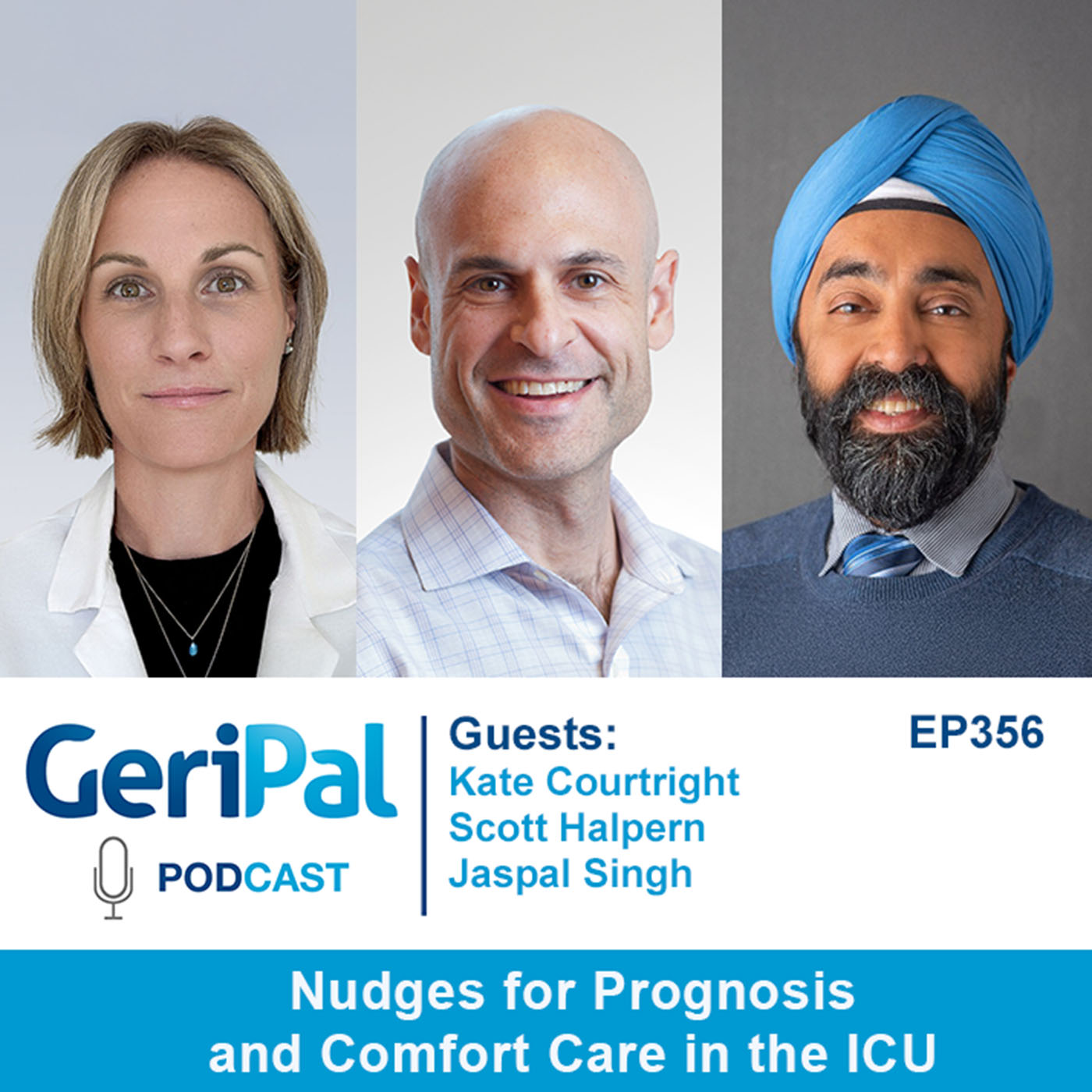
Nudges for Prognosis and Comfort Care in the ICU: Kate Courtright, Scott Halpern, & Jaspal Singh
Our main focus today was on nudging critical care clinicians to consider a more palliative approach to care. Our guests are all trained in critical care: Kate Courtright, Scott Halpern, and Jaspal Singh. Kate and Scott have additional training in palliative medicine. To start. we review: What is a nudge? Also called behavioral interventions, heuristics, and cognitive biases. Prior podcasts
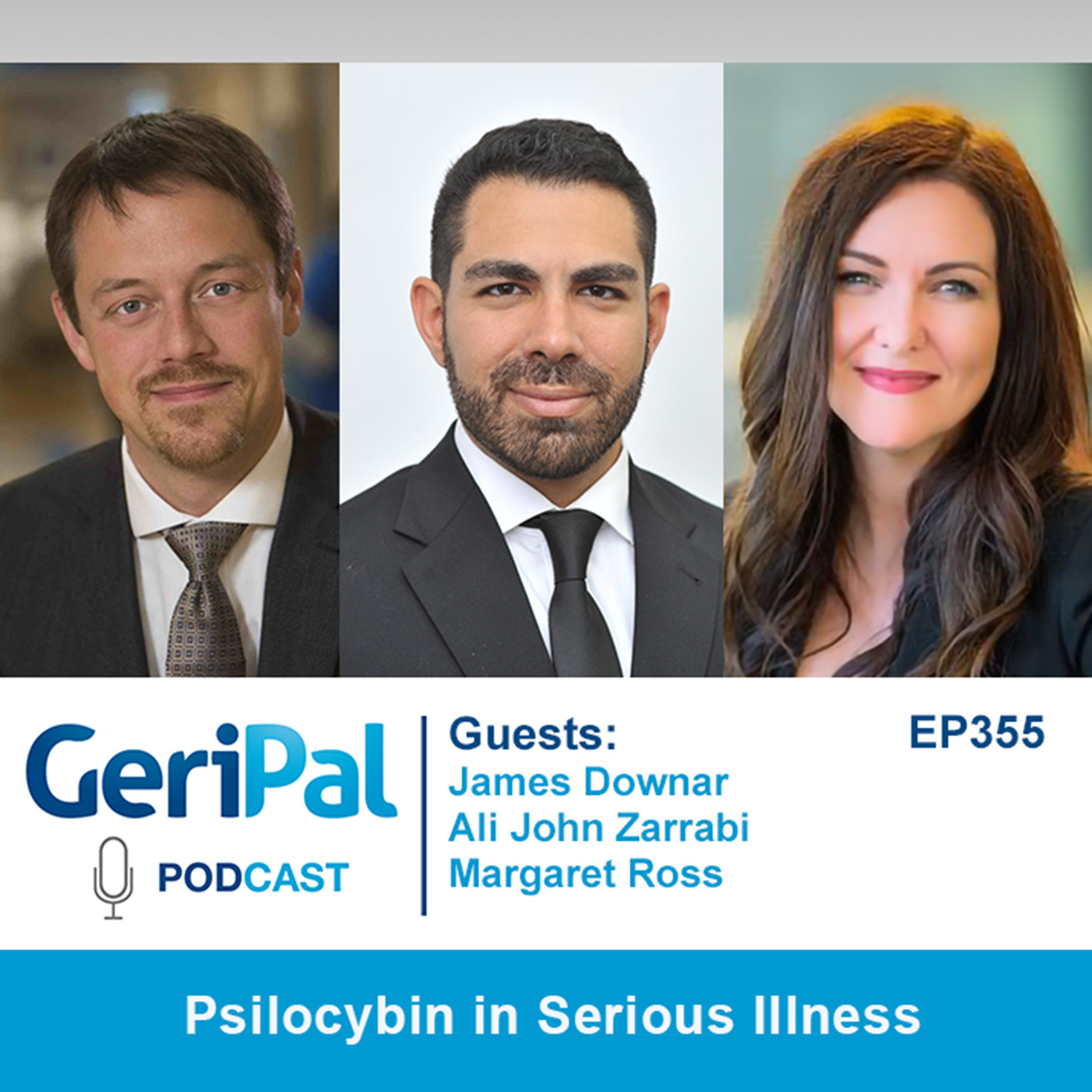
Psilocybin in Serious Illness: A Podcast with James Downar, Ali John Zarrabi and Margaret Ross
We've covered psychedelics on the podcast before—first in 2019 with Ira Byock, where we explored their potential role in medicine, and then again in 2023 with Stacy Fischer, Brian Anderson, and Theora Cimino, focusing on the reasons to approach psychedelic use in patients with caution. In today's episode, we're taking a closer look at the current state of the science around one specific psychedel

HIV, Aging, and Palliative Care: Peter Selwyn and Meredith Greene
Peter Selwyn, one of today's guests, has been caring for people living with HIV for over 40 years. In that time, care of people with HIV has changed dramatically. Initially, there was no treatment, then treatments with marginal efficacy, complex schedules, and a tremendous burden of side effects and drug-drug interactions. The average age at death was in the 30s. Now, more people in the US die
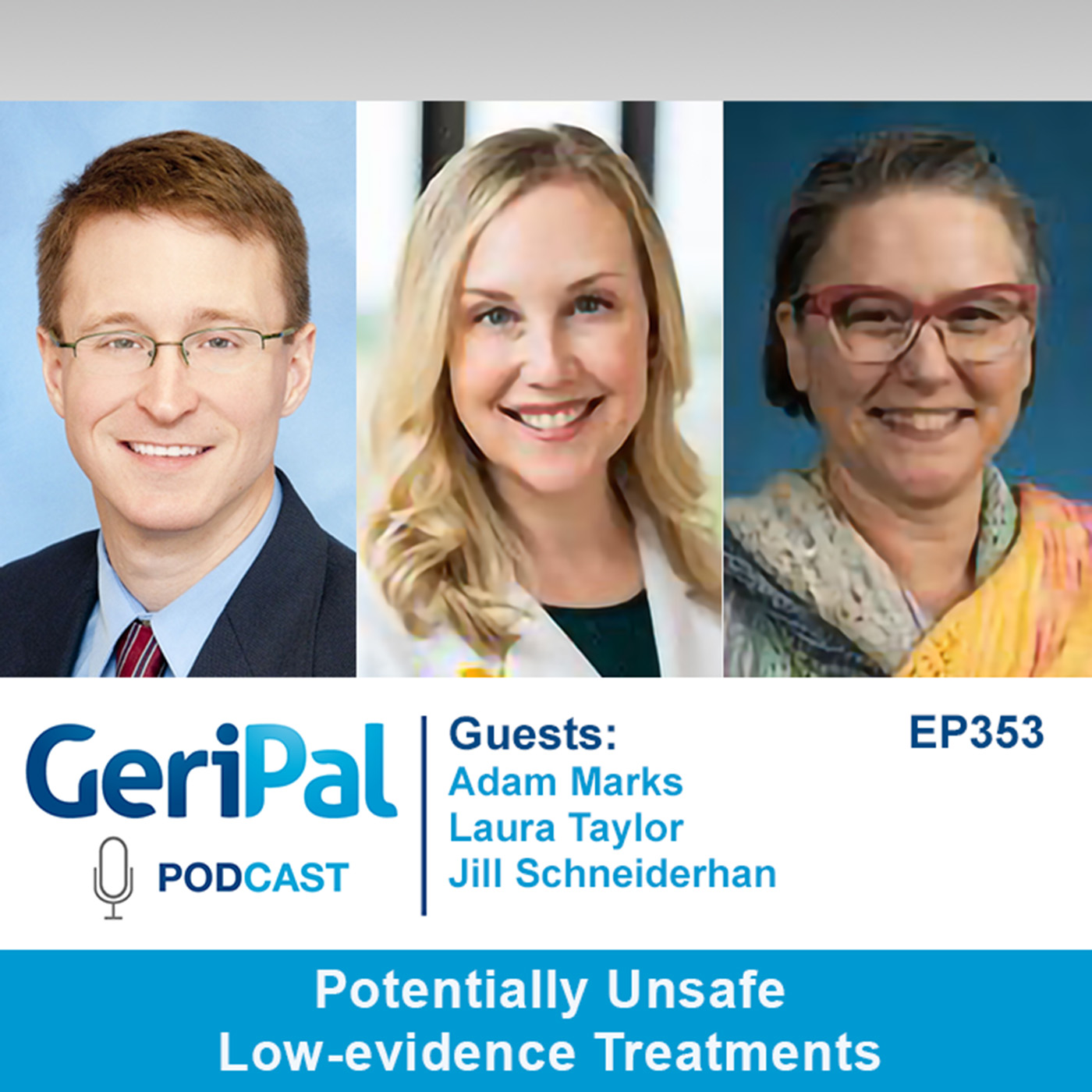
Potentially Unsafe Low-evidence Treatments: Adam Marks, Laura Taylor, & Jill Schneiderhan
More and more people are, "doing their own research." Self-identified experts and influencers on podcasts (podcasts!) and social media endorse treatments that are potentially harmful and have little to no evidence of benefit, or have only been studied in animals. An increasing number of federal leaders have a track record of endorsing such products. We and our guests have noticed that in our c

Loss of DEI Hurts Everyone: Farah Stockman, Ali Thomas, Ken Covinsky
I read Farah Stockman's article in the NYT on why attacks on DEI will cost us all, and thought, "Yes, and 'everyone' includes harm to our healthcare workforce, our patients, and their families." So we're delighted that Farah Stockman, pulitzer prize winning journalist, author of American Made: What Happens to People When Work Disappears, and editorial board member at the New York TImes joins us

RCT of PC in ED: Corita Grudzen, Fernanda Bellolio, & Tammie Quest
Early in my research career, I was fascinated by the (then) frontier area of palliative care in the emergency department. I asked emergency medicine clinicians what they thought when a patient who is seriously ill and DNR comes to the ED, and some responded, (paraphrasing), what are they doing here? This is not why I went into emergency medicine. I went into emergency medicine to act. I can't do

GeriPal Takeover! Nancy Lundebjerg and Annie Medina-Walpole
Whelp, goodbye folks! Eric and I have been DOGE'd. In a somewhat delayed April Fools, Nancy Lundebjerg and Annie Medina-Walpole have taken over podcast host duties this week. Their purpose is to interview me, Eric, and Ken Covinsky about your final AGS literature review plenary session taking place at the Annual Meeting in Chicago this May (for those attending, our session is the plenary the morn

Pragmatic Trial of ACP: Jennifer Wolff, Sydney Dy, Danny Scerpella, and Jasmine Santoyo-Olsson
A pragmatic trial evaluates the effectiveness of a treatment or intervention in "real-world" clinical practice. Outcomes are typically assessed from available records. Eligibility in pragmatic trials are often broad, and don't have the exclusions of efficacy studies, which examine treatment effects under highly controlled conditions in highly select populations. Today we are delighted to welcome

Hastening Death by Stopping Eating and Drinking: Hope Wechkin, Thaddeus Pope, & Josh Briscoe
Eric and Alex have featured discussions about complex bioethical concepts around caring for people at the end of life, including voluntarily stopping eating and drinking (VSED), and multiple episodes about the ethical issues surrounding medical aid in dying (MAID). Recently, discussion has emerged about how these issues intertwine in caring for patients with advancing dementia who have stated that

The Roots of Palliative Care: Michael Kearney, Sue Britton, and Justin Sanders
As far as we've come in the 50 years since Balfour Mount and Sue Britton opened the first palliative care at the Royal Victoria Hospital in Quebec, have we lost something along the way? In today's podcast we welcome some of the early pioneers in palliative care to talk about the roots of palliative care. Sue Britton was the first nurse hired on that palliative care unit. Michael Kearney on a tran

PC for People Experiencing Homelessness: Naheed Dosani
I was very proud to use the word "apotheosis" on today's podcast. See if you can pick out the moment. I say something like, "Palliative care for people experiencing homelessness is, in many ways, the apotheosis of great palliative care." And I believe that to be true. When you think about the early concepts that shaped the field, you can see how palliative care for persons experiencing homeles

PC for Patients with Substance Use Disorder: Janet Ho, Sach Kale, Julie Childers
Much like deprescribing, we plan to revisit certain high impact and dynamic topics frequently. Substance use disorder is one of those complex issues in which clinical practice is changing rapidly. You can listen to our prior podcasts on substance use disorder here, here, here, and here. Today we talk with experts Janet Ho, Sach Kale, and Julie Childers about opioid use disorder and serious il
Recommended
The Great Detectives of Old Time Radio| Daily Mystery Dramas
TED Business
Ranger Bill | Old Time Radio Adventure & Family Drama

زن بودن

Christmas Old Time Radio

The Adventures of Superman | Old Time Radio

Booked, Blonde & Busy w/ Olivia Ponton

The Human-Animal Connection - Pet Life Radio Original
Medicine with Meaning

Homemaking with Jesus | Weekly Devotionals, Biblical Application, Simple Living, Home Management, Healthy Relationships
Disney+ Hulu Throwbacks Podcast

The Daily
