Research Matters Podcast
Jason Luoma, Ph.D. 28 episodes Jul 14, 2026
The Research Matters Podcast features interviews with leading scientific researchers in psychology and other social sciences, exploring what makes them highly productive. Host Jason Luoma, Ph.D., draws out the tips, tricks, habits, and routines behind extraordinarily productive research careers. Episodes cover building a programmatic line of research, forming strong collaborations, productive writing, grant strategies, running an effective lab, and applying design thinking to research. The show is aimed at graduate students, professors, and scientists who want actionable strategies for their own research work. It also touches on managing students, choosing which projects to invest in, and balancing research with health, fun, and family.
Episodes

Research in Practice, Part 3: Making Research Inevitable
In the final installment of the Research in Practice series, Jason Luoma focuses on turning ideas into action. After establishing the organizational incentives in Part 1 and the financial infrastructure in Part 2, this episode provides a practical roadmap for launching and sustaining a research program within a clinical practice. Jason walks through the minimum infrastructure needed to get started

Research in Practice, Part 2: Designing the Engine
In Part 1 of this series, we explored why research often disappears from fee-for-service clinical settings despite clinicians valuing scientific inquiry. In this episode, Jason Luoma moves from theory to implementation by outlining the financial and organizational systems that make research sustainable over the long term. Rather than relying on leftover time or grant funding, Jason explains how to

Research in Practice, Part 1: Rethinking Incentives
Most clinicians are trained in research, yet very few clinical practices consistently produce it. Why? In this special solo episode, Jason Luoma steps away from the interviewer role to explore one of the biggest structural barriers to clinician-led research: incentives. Traditional fee-for-service models reward billable hours, often leaving little time for the deep thinking, writing, and collabora
Mary Alvord, PhD, on Building Resilience, Scaling Access, and Practice-Based Research in Real-World Settings
Dr. Mary Alvord is a clinical psychologist with over four decades of experience, known for her innovative work integrating cognitive-behavioral therapy with resilience training for youth. As founder of Alvord, Baker & Associates and the nonprofit Resilience Across Borders, Dr. Alvord has led a groundbreaking effort to merge clinical practice, research, and social impact. In this episode, she
Louis Castonguay, PhD, on Practice Research Networks, Mutual Respect in Science, and the Joy of Collaboration
Louis Castonguay, Ph.D., is a professor of psychology at Penn State University and a leading figure in contemporary psychotherapy research. With a career spanning decades, Dr. Castonguay has focused on what truly makes psychotherapy work—examining the variables that shape client outcomes, therapeutic relationships, and the process of change. But perhaps what sets him apart most is his leaders
Dr. Jackie Persons on Integrating Research into Private Practice and Advancing CBT
Dr. Jacqueline (Jackie) Persons is a distinguished clinician, researcher, and Clinical Professor at the University of California, Berkeley. She served as president of the Association of Cognitive and Behavioral Therapies (ABCT) in 1999 and currently works in private practice at the Oakland Cognitive Behavior Therapy Center. With over 35 years of experience, Dr. Persons is recognized globally for

Patricia Arean, PhD: Effective Strategies for Community Engagement and Digital Innovations in Mental Health Research.
Dr. Patricia Arean is is the Director of the Division of Services and Intervention Research at the National Institute of Mental Health (NIMH), as well as a clinical researcher and former professor at the University of Washington's Department of Psychiatry and Behavioral Sciences. With over 30 years of experience, Dr. Arean has focused her career on increasing access to mental health services for

Tony Biglan, Ph.D., on balancing funding with following your true passions
Tony Biglan, Ph.D., is a Senior Scientist at Oregon Research Institute and Co-Director of the Promise Neighborhood Research Consortium. For the past thirty years, he has conducted research in the development and prevention of child and adolescent problem behavior. He is a former president of the Society for Prevention Research and was a member of the Institute of Medicine Committee on Prevention.
Dean McKay, Ph.D., A.B.B.P. on mental health in academia, getting into grad school, authorship, and personal planning
Dean McKay, Ph.D., A.B.B.P. is Professor of Psychology at Fordham University where he is a member of the clinical psychology doctoral program. His lab, Compulsive, Obsessive, and Anxiety Program (COAP) provides instruction to undergraduate, masters, and doctorate levels. Dr. McKay's expertise is in anxiety and obsessive-compulsive behavior, with his current focus being on Covid-19 related stress a
Steven C. Hayes, PhD, on controversy, his lab culture, and how political organizing can help you in science
Dr. Hayes is a Nevada Foundation Professor of Psychology in the Behavior Analysis Program at the University of Nevada, Reno. An author of 46 books and nearly 650 scientific articles, he is especially known for his work on Acceptance and Commitment Therapy, which is one of the most widely used and researched new methods of psychological intervention in the last 20 years. Dr. Hayes has received man
Jessica Borelli, Ph.D., on Work/Family Conflict, Gender Roles, and Intervention Research with Diverse Communities
Jessica Borelli, Ph.D., is an Associate Professor of Psychological Science at the University of California, Irvine. She is a clinical psychologist specializing in the field of developmental psychopathology, and her research focuses on the links between close relationships, emotions, health, and development. Today Dr. Borelli shares her own experience with balancing her family life and her ambi
James Kirby, PhD, and Jeffrey Kim, on incorporating physiological data in psychological research
James Kirby, Ph.D., is a researcher and senior lecturer at the University of Queensland in Australia, who studies the effects of kindness and compassion. Jeff Kim, a graduate student under Dr. Kirby, joins my discussion with Dr. Kirby on measuring and incorporating physiological data into their research. Today's conversation is focused on measuring heart rate variability. Like many of us, Dr. Kirb
Bethany Teachman, PhD, and Jeremy Eberle, on embracing an open-science mindset
Does the thought of practicing open science give you sweaty palms? That's a normal reaction for those of us who weren't formally trained in the open-science methodology. The sweaty-palm reaction is really not that surprising since most of us have gotten where we are today because we've been meticulous in our work and tried to put out the best work we possibly could. In a nutshell, we tend to be pe
Jessica Schleider, PhD, on Open Science and Replicability Practices and Diversity, Equity, and Inclusion in Academia
Jessica Schleider, PhD, is an assistant professor of clinical psychology at Stony Book University and a graduate of the Clinical Psychology Program at Harvard University. When in graduate school, she learned about open science – not from her courses but from the Twitter-spere and later from The Black Goat Podcast. What she learned was compelling and unsettling and kept her up at night as she thou

Maria Karekla, PhD, on wearables in research and getting a psychophysiology lab up and running
Dr. Maria Karekla is an assistant professor at the University of Cyprus where she studies anxiety and cravings and specializes in utilizing psychophysiological measurements in her research. I decided to interview her because she has one of the few labs in the world that has done research comparing consumer grade wearable physiological measurement devices to research grade stationary devices. I was
Todd Kashdan, on going against the grain, idea capture, and autonomy
Todd Kashdan, PhD, is a professor of psychology at George Mason University, where he's senior scientist at the Center for the Advancement of Wellbeing. He's been a leading researcher in positive psychology from when that area first started to blow up, but often plays the role of someone who challenges established wisdom in that area of research. When looking for the right job, Dr. Kashdan sought
Ken Weingardt, on personal mission statements and tech startups in the mental health space
How many people do you know who have a personal mission statement…and have it memorized…and actually live by it? Well, now you know of one more. Dr. Ken Weingardt's personal mission statement is to "use technology to improve access to behavioral health services." An addictionologist by training, Dr. Weingardt held various positions in academia and research -- from faculty appointments at major med
Kelly Wilson, PhD, on the importance of theory, chasing your interests, and giving away ideas
Dr. Kelly Wilson is a recently retired, emeritus faculty at the University of Mississippi. He is a leading researcher, theorist, and trainer of Acceptance and Commitment Therapy and an important contributor to clinical behavior analysis. He has published nine very well selling books. Dr. Wilson's path into research is certainly atypical. If you had seen him as a young adult, he would probably have

Lynnette Averill, PhD, on moving from counseling psychology to neuroscience, getting a Fulbright, and ketamine research
Dr. Averill is an assistant professor in the Yale School of Medicine, Department of Psychiatry and research fellow in the clinical neurosciences division of the National Center for PTSD VA Connecticut Healthcare System. Her research focuses primarily on studying the neurobiological mechanisms involved in ketamine as a treatment for PTSD and suicidality. Although Dr. Averill originally got her degr
Shannon Wiltsey Stirman, on embracing the messy and dissemination and implementation science
Shannon Wiltsey Stirman, PhD, of the Department of Psychiatry and Behavioral Sciences at Stanford University Medical School and is Acting Deputy Director, Dissemination and Training Division, National Center for PTSD. She's a leading researcher in the area of disseminating evidence-based therapies. As part of this, she juggles two RO1 research grants from NIMH, working with multiple teams, and hav
Alan Kooi Davis on Getting Started in Psychedelic Science, Collaboration, and the Source Research Foundation
Dr. Alan Kooi Davis is an Assistant Professor of Social Work at The Ohio State University and an Adjunct Assistant Professor in the Psychedelic Research Unit at Johns Hopkins University. He's a researcher in the area of psychedelics, especially psilocybin, and how psychedelics can be used in treatment. He has also done research on harm reduction and drug use more generally, but in this episode we
George Bonanno on Unconventional Research, Being Led by Curiosity, and How to Deal with Setbacks
Dr. Bonanno is chair of the department of counseling and clinical psychology at Columbia University's Teachers College. He is a world leader on research around trauma, bereavement, and resilience. His interest in how people cope with difficult events and circumstances has led to studies around grief, trauma, acute medical situations, and other unpleasant events. In this episode, you'll lear

Joanna Arch on Disciplined Time Tracking, Grant Writing, and the Blending of Passion and Profession
Joanna Arch is an associate professor at the University of Colorado, Boulder. She is also a member of the Cancer Center in the Division of Cancer Prevention and Control. Her research initially focused on anxiety disorders, but she's recently added a focus on cancer patients. Being married to an oncologist and having a personal interest in existential issues helped her embrace her initial reservati
Evan Forman on Nurturing Collaborations, Finding Stellar Project Coordinators, and Healthy Skepticism
Dr. Evan Forman is a professor of psychology at Drexel University and a director of the University's "WELL Center" (Center for Weight, Eating and Lifestyle Science), an interdisciplinary clinic, research, and training center dedicated to developing and sharing innovative solutions to treat obesity, poor diet, sedentariness and disordered eating. In this Episode you'll learn: How to create ferti
Matthew McKay on How to Write More than 30 Professional Books
Today's interview is with Dr. Matthew McKay. Dr. McKay is a co-founder of New Harbinger publications and a professor at The Wright Institute in Berkeley, California. For those who don't know, New Harbinger is one of the largest publishers of mental health related books. Through New Harbinger, he pioneered the very idea of client workbooks and has written many himself. In addition to being an activ

Jonathan Bricker on Creating Research Teams and Life at an Independent Research Center
I'm pretty sure that Jonathan Bricker has more research funding to study Acceptance and Commitment Therapy than any other researcher (it's hard to confirm this as there is no central database). For this alone he's a person worth interviewing. He's also interesting as a researcher who deeply considers how research can help us scale psychosocial interventions to reach millions of people, and thus ap
Kelly Koerner on Finding the Edge of What is Known in Research
Dr. Kelly Koerner is currently the Creative Director of the Evidence-Based Practice Institute, a company she founded. Her work combines technology, design thinking, and science to improve mental health care and help clinicians implement evidence-based practices. After graduating from University of Washington, she was one of the earliest pioneers of Dialectical behavior therapy as the first CEO of
E1 - Mike Twohig on Producing Tons of Research While Biking Hundreds of Miles a Week and Having a Family
For this show I interview Dr. Mike Twohig, a professor at Utah State University. I've known Mike since the end of graduate school where I first observed the remarkable ways in which he goes about his research. One thing I have always admired is that he somehow manages to be extraordinarily productive, while at the same time living a balanced life. For example, in addition to being an incredibly pr
Recommended
Suspense OTR

پلی لیست | PlayList

Crime Stories with Nancy Grace

Conspiracy Files with Paige Carter

Bible Tea
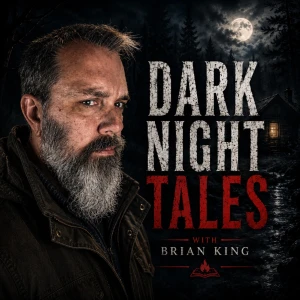
Dark Night Tales with Brian King

Fox news

CBS Radio Mystery Theater | Old Time Radio

Old Time Radio Mystery, Suspense, & Horror

ABC News Update

Learn English Fast! English Snacks with Amber - Short Lessons to Speak English Like a Native

این نقطه
