Stanford Medicine Health Compass
Stanford Medicine Health Compass 18 episodes Nov 10, 2026
Stanford Medicine Health Compass is a health podcast from Stanford Medicine that translates current medical research into accessible stories and practical insights. Host Maya Adam, MD, interviews leading experts on topics featured in Stanford Medicine magazine, including mental health treatment and artificial intelligence in medicine. Each episode aims to explain complex science while highlighting the personal journeys behind medical innovations. The show is designed to help listeners make more informed choices for healthier lives.
Episodes

S4 Ep3: Is your gut microbiome the key to fine tuning your health?
Stanford Medicine microbiologist Justin Sonnenburg explains how the trillions of microbes in our gut shape our health, why fiber matters so much, and which gut health trends hold up.

S4 Ep2: Perimenopause and menopause: What’s happening in your body?
How does the body change during perimenopause and menopause? Stanford Medicine gynecologist Karen Adams, MD, explains what happens during this transition, explores treatment options and shares how women can navigate midlife and prioritize their long-term health.

S4 Ep1: How do we optimize sleep and what can it tell us about our health?
Stanford Medicine sleep scientist Jamie Zeitzer explains how light, timing, habits and aging shape our sleep, and shares science-backed ways to sleep better and protect our health.

S3 Ep5: Can protecting neurons change the future of glaucoma care?
Glaucoma is known as the “silent thief of sight,” often causing vision loss before people realize anything is wrong. In this episode, Stanford physician-scientist Jeffrey Goldberg shares how his work aims not just to slow damage, but to protect and strengthen the neurons that make vision possible.

S3 Ep4: What if we could stop kidney stones before they start?
Kidney stones may seem like a temporary problem, but for millions of people they are painful, recurring, and poorly understood. Stanford nephrologist Alan Pao studies how the kidneys regulate minerals and chemical balance, uncovering how a little-known molecule called citrate could help stop stones before they form.
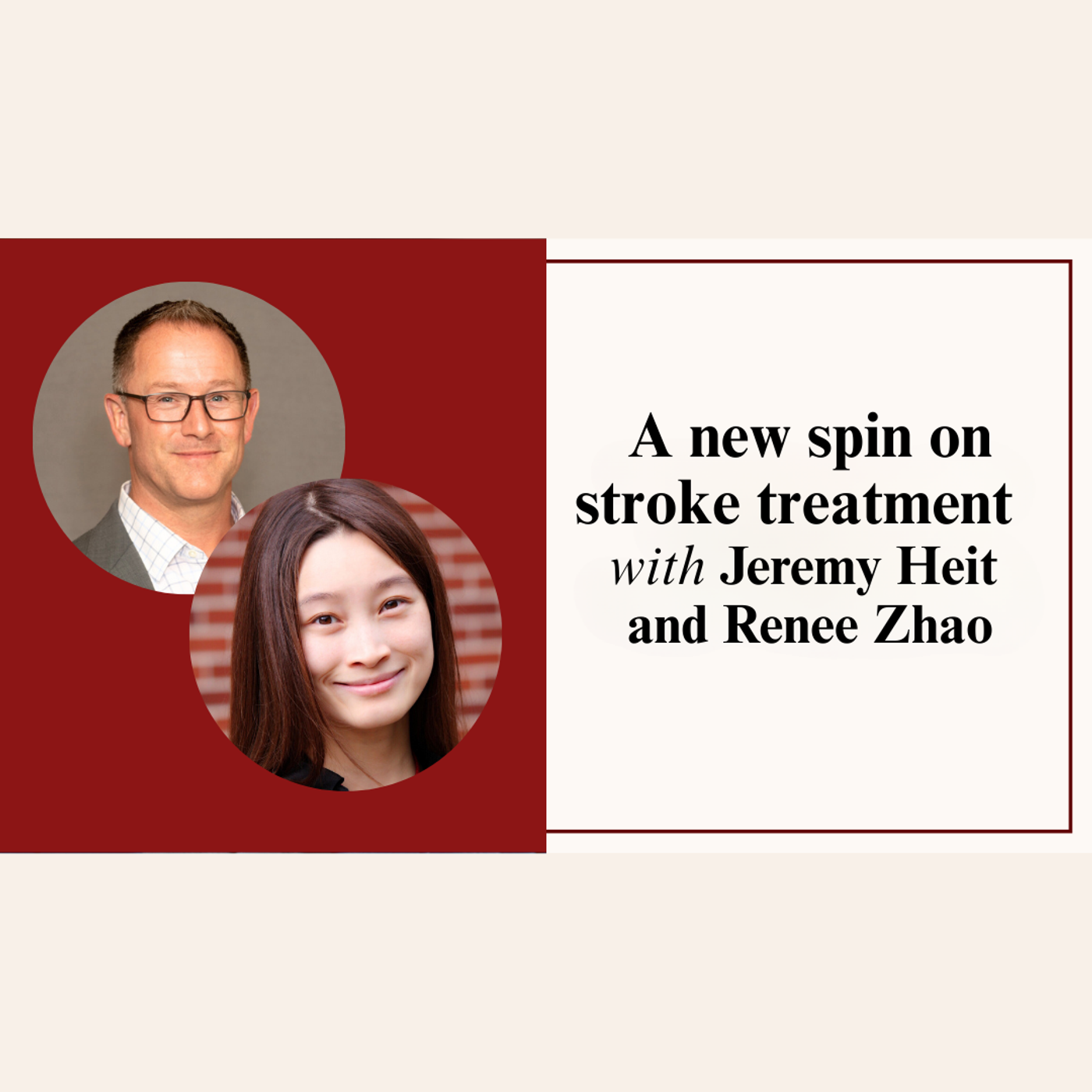
S3 Ep3: What can collaboration across disciplines unlock for the future of stroke care?
A stroke caused by a blocked artery is one of the most time-critical emergencies in medicine. In stroke care, minutes matter — and so does precision. The difference between paralysis and recovery often comes down to how quickly, and how completely, a blood clot can be removed. At Stanford, an engineer and a physician partnered up to rethink that problem entirely.
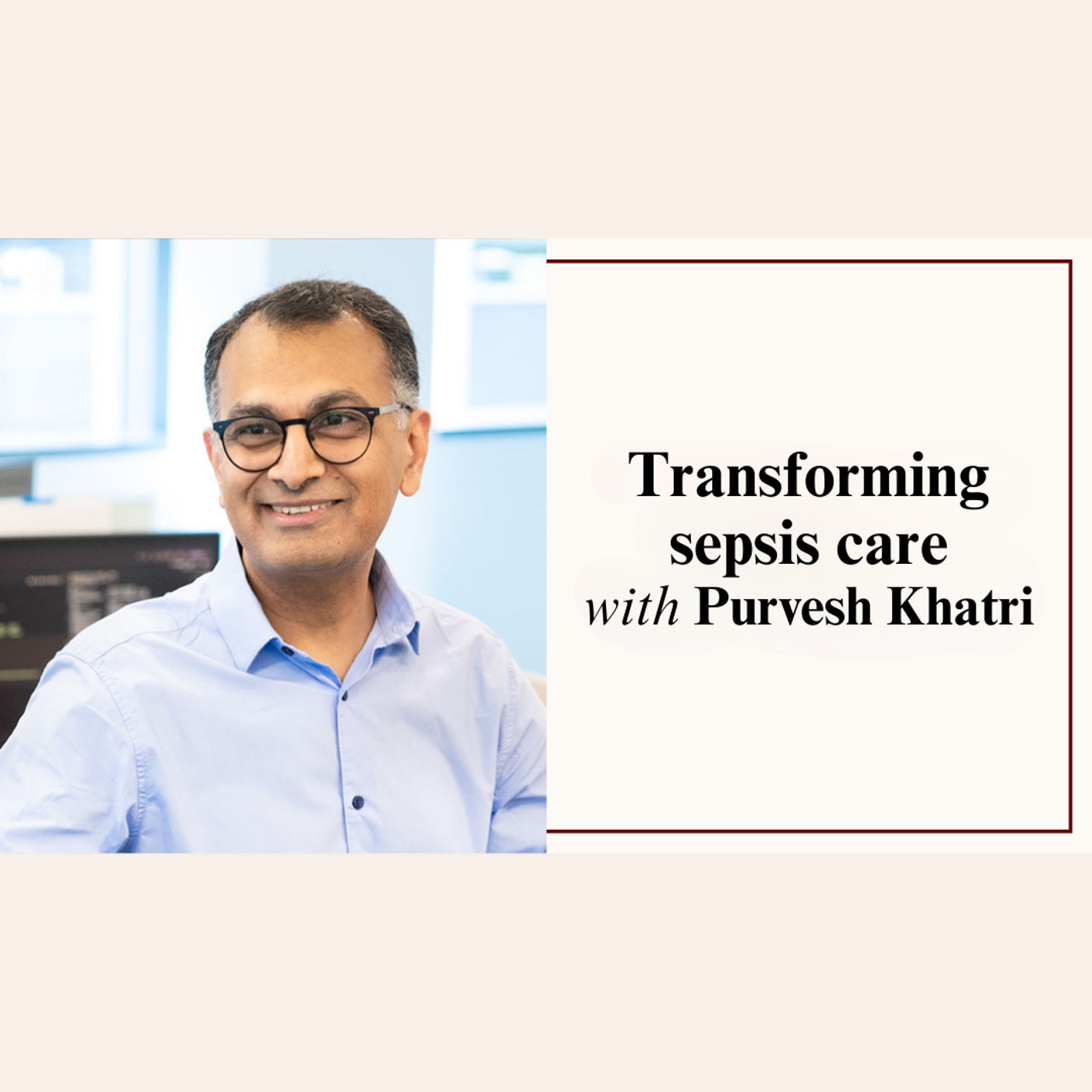
S3 Ep2: How can curiosity — and a willingness to pivot — lead to life-saving breakthroughs?
From uncertainty to impact, Purvesh Khatri’s career path was anything but straight. In this episode, he shares how curiosity and a willingness to pivot led to a breakthrough blood test that helps doctors make faster, life-saving decisions for sepsis.

S3 Ep1: How have researchers turned decades of work into real hope for families living with epidermolysis bullosa?
Epidermolysis bullosa, often called “butterfly skin,” makes even the smallest touch painful. In this episode, we explore the courage of patients and families living with EB, and how Stanford clinician-researchers are helping turn decades of research into the first gene therapies that offer real hope.

S2 Ep5: How does food change the microbiome and our overall health?
Sean Spencer, MD, PhD, instructor of medicine, explores how he treats patients with challenging gastrointestinal issues, working with them to heal their guts and improve their microbiomes through a variety of tactics, including through introducing a variety of foods in small doses, adding more fiber and fermented foods to their diet, and giving “gut shots” of brine from fermented foods.Read more

S2 Ep4: What can we learn from a scientist living with sickle cell?
Laura Dassama, PhD, assistant professor of microbiology and immunology and of chemistry, is developing new a new type of therapy for patients who, like her, live with sickle cell disease, which is caused by a mutation in the gene that codes for hemoglobin, the protein responsible for the ability of red blood cells to carry oxygen. Dassama speaks to her experience with the illness and describes ho

S2 Ep3: The ethics of science: How do we balance progress with safety?
Drew Endy, PhD, associate professor of bioengineering, is well-versed in a wide range of ethical quandaries in science today. He’ll discuss what science’s most pressing ethical concerns are, with a focus on misuse of AI and the pros and cons of harnessing synthetic biology to create new solutions for intractable problems in health and medicine. Read more in Stanford Medicine magazine: https://sta

S2 Ep2: Is exercise the health hero we all need?
Euan Ashley, MB ChB, DPhil, chair of the department of medicine and professor of genetics and of biomedical data science, leads the MotrPac project, a research group that analyzes the effects of exercise on humans and animals. Ashley discusses what exercise does to the human body on a molecular level, why that matters, and how to incorporate exercise into daily life, including short bouts of “exe

S2 Ep1: What do we know about Alzheimer's disease and what brings us hope?
Following part one of the Alzheimer’s episode, Sharon Sha, MD, MS, clinical professor of adult neurology, later speaks to the practical questions patients and families want to know about receiving an Alzheimer’s diagnosis and how she helps her patients navigate their health journeys.

S2 Ep1: What do we know about Alzheimer's disease and what brings us hope?
In the first segment of a two-part episode, Michael Greicius, MD, MPH, professor of adult neurology, begins by discussing his research in understanding the genetic and molecular roots of Alzheimer’s disease and shares insights into the convoluted landscape of emerging treatments and whether they work.

S1 Ep6: What can one doctor’s cancer journey teach us about being a patient and provider?
When Bryant Lin, MD, physician and faculty member at Stanford Medicine, was diagnosed with stage 4 never-smoker lung cancer, he took it as an opportunity to do what he does best: teach. Lin launched a class diving into a variety of topics around cancer care, grappling with tough conversations, and the difficult choices that come with navigating drastic changes in one's health. In a conversation wi

S1 Ep5: What's giving us hope amid a global mental health crisis?
Maya Adam, MD, and her guests Victor Carrion, MD, professor of psychiatry and behavioral science, and Laura Roberts, MD, professor and chair of psychiatry and behavioral sciences, shine a spotlight on the global mental health crisis and share how research at Stanford Medicine is giving new hope to patients seeking clearer diagnoses and better treatments. Carrion explores the impact of trauma on yo

S1 Ep4: Why are women at a greater risk for autoimmune diseases?
While the immune system is normally the body’s sworn protector, it can sometimes turn against us. Maya Adam hosts Howard Chang, MD, PhD, professor of dermatology and of genetics, and Diana Dou, PhD, former Stanford Medicine postdoctoral scholar and current assistant professor of immunology at Duke University, to discuss autoimmune diseases and why women are at an increased risk. Chang and Dou shar

S1 Ep3: How can we break the silence on mental health?
This episode discusses suicide and may be distressing for some listeners. If help is needed, the U.S. national suicide and crisis lifeline is available by calling or texting 988 or by chatting at 988lifeline.org.Maya Adam and Leanne Williams, PhD, professor of psychiatry and behavioral science, talk about tackling the stigma surrounding mental health challenges, a burden that still too often preve

S1 Ep2: What can we learn from the world’s longest living senior citizens?
With life expectancy globally continuing to climb, Maya Adam, MD, and David Rehkopf, ScD, associate professor of epidemiology and population health and of medicine, talk about the lessons we might all draw from “blue zones,” the places where residents' enjoy extraordinarily long lifespans. Rehkopf discusses the importance of social connections, diet and everyday activity as keys to health aging. H

S1 Ep1: What does it mean to bring AI into health care?
Artificial intelligence is making waves in nearly every industry, but questions still abound. Maya Adam, MD, and guests Jonathan Chen, MD, PhD, assistant professor of medicine and biomedical data sciences, and Michael Pfeffer, MD, chief information officer of Stanford Health Care and the Stanford School of Medicine, talk about how AI is being brought into the folds of medicine. From questions like

This season on Health Compass from Stanford Medicine
Join Maya Adam, MD, as she navigates health’s biggest questions with leading experts featured in Stanford Medicine magazine
Recommended

SLOW ENGLISH PODCAST (A1-A2) With Subtitles | Daily Videos | English With Us Podcast
Stand In The Circle

English with Olivia | Slow Conversations & Vocabulary
Talk About Talk - Executive & Leadership Communication Skills

Learn English B1 with Daily News | English Listening Practice

Learn English A2 with Daily News | Simple English Listening Practice

Bad Friends

Learn 50 English Phrases While You Sleep | Everyday English Phrases & Vocabulary

Dateline NBC

True Crime Classics

Yours Truly Johnny Dollar Collection
Suspense OTR
