Social Science Bites features short interviews with leading social scientists about their research and ideas. Each episode offers a bite-sized conversation on topics across the social sciences, making scholarship accessible to a broad audience. The show is produced by SAGE Publishing.
Episodes

Gillian Sandstrom on Talking to Strangers
Alex Edmans on Market Irrationality
elief in 'markets' among the financial elite at time can at time border on the theological, with approaches like the efficient market hypothesis or the invisible hand cited, unironically, as dogmas. But finance professor Alex Edmans of the London Business School would like to have a quiet word with Mr. Market; Edmans would like to tell him that he's a bit, well, irrational. That's not the dig it
Rafael Schacter on Graffiti
Graffiti has a long pedigree, whether our starting point is the wall paintings of Lascaux, the carved crudities of Roman toilets or the G.I. inspired Kilroy of World War II's European theater. But Graffiti – notice our use of the capital G – and its focus on individual tags has a more recent provenance and should be regarded as a legitimate art form, with its own canon, its own 'kings,' its own r
Ariel Kalil on Parents' Role in Child Development
When discussing youngsters' life outcomes, school is often the first place someone starts investigating. And yet school time is dwarfed by the amount of time kids spend with their parents or other adult caregivers. Recognizing this, developmental psychologist Ariel Kalil, the Daniel Levin Professor at the University of Chicago Harris School of Public Policy, focuses her child development research
Mahzarin Banaji on Social Cognition
One of the promises of artificial intelligence is that it will mimic, and perhaps even improve, on human thinking. One of those hoped-for improvements was that AI would not exhibit human biases. Turns out that in one area, AI can indeed mimic human thinking, and it's in that field of bias. As Harvard psychologist Mahzarin Banaji -- one of the creators of the widely used implicit bias test -- expl
Daniel Yon on the Brain as Scientist
The human brain works very hard behind the scenes even in the most mundane aspects of daily life, like enjoying a nice day or determining the meaning of chit-chat with a friend. Ferreting out the basis and structures of our brain's labor is the domain of Daniel Yon, a psychologist and neuroscientists and director of the Uncertainty Lab at Birkbeck, University of London. In this Social Science Bi
Tom Gilovich On the Spotlight Effect
Tom Gilovich finds it fun to study the whys and wherefores of how human beings make sense of the information delivered by the world around them. And why not, he explains to interviewer David Edmonds in this Social Science Bites podcast. "We're dynamic, very complicated creatures who do all sorts of things and sometimes make you go, 'Huh?' That's interesting." He adds, "At the same time, some of
Ellora Derenoncourt on the US Racial Wealth Gap
This Social Science Bites podcast offers a dollop of good news and heaping helping of bad. The good news is that since the end of American Civil War the economic condition of Back Americans has improved, using as a comparison the presumed status quo population of white Americans. According to Princeton University economist Ellora Derenoncourt, this "wealth gap" has fallen from 60-to-one to six-to
Steven Pinker on Common Knowledge
There is a value to shared knowledge that tends to go unrecognized because it's so ubiquitous. Nonetheless, experimental psychologist Steven Pinker explains in this Social Science Bites podcast, common knowledge underlies things like paper money, governance, and even coral reefs. And common knowledge, he makes clear to host David Edmonds, "does not have its ordinary sense of conventional wisdom or
Mukulika Banerjee on Indian Democracy
A key insight social anthropologist Mukulika Banerjee had while observing electoral behavior in a Bengali village was that -- at least in the India of that moment -- elections were sacred. This was not a religious epiphany but a cultural one; at the center was not a figure, religious or political, but an ideal - democracy. Banerjee has explored her insights in the years since in a variety or for
Paul Bloom on Empathy
In 2016 psychologist Paul Bloom wrote a book titled Against Empathy: The Case for Rational Compassion (a naming decision he still wrestles with). In the book, as in his career and in this Social Science Bites podcast, Bloom deconstructs what is popularly meant by empathy. "Everybody seems to have their own notion," he tells interviewer David Edmonds, "and that's totally fine, but we end up talki
Devyani Sharma on Accents
What does your accent – and yes, every speaker has one – say about you? Or perhaps the better question is, what do others hear in your accent? These are the sorts of questions that Devyani Sharma, a professor of language and communication at Oxford's Worcester College, asks every day, especially about the many English speakers around the world. In this Social Science Bites podcast, Sharma takes
Frank Keil on Causal Thinking
As a practical matter, how much effort do you put into pinning down the causes behind daily occurrences? To developmental psychologist Frank Keil, who studies causal thinking, that answer is likely along the lines of 'not enough.' A lack of causal thinking is both endemic, and, to an extent, hurtful these days, he argues, suggesting that lacking even simplified causal models makes things like the
Setha Low on Public Spaces
Having been raised in Los Angeles, a place with vast swathes of single-family homes connected by freeways, arriving in Costa Rica was an eye opener for the young cultural anthropologist Setha Low. "I thought it was so cool that everybody was there together," she tells interview David Edmonds in this Social Science Bites podcast. "… Everybody was talking. Everybody knew their place. It was like a
Victor Buchli on Life in Low-Earth Orbit
As an anthropologist, Victor Buchli has one foot in the Neolithic past and another in the space-faring future. A professor of material culture at University College London, his research has taken him from excavations of the New Stone Age site at Çatalhöyük, Turkey to studies of the modern suburbs of London to examinations of life on -- and in service to -- the International Space Station. It is
Ramanan Laxminarayan on Antibiotic Use
Let's say you were asked to name the greatest health risks facing the planet. Priceton University economist Ramanan Laxminarayan, founder and director of the One Health Trust, would urgently suggest you include anti-microbial resistance near the top of that list. "We're really in the middle of a crisis right now," he tells interview David Edmonds in this Social Science Bites podcast. "Every yea
Leor Zmigrod on the Ideological Brain
Flexibility is a cardinal virtue in physical fitness, and according to political psychologist and neuroscientist Leor Zmigrod, it can be a cardinal virtue in our mental health, too. How she came to that conclusion and how common rigid thinking can be are themes explored in her new book, The Ideological Brain. "I think that from all the research that I've done," she tells interviewer David Edmon
David Autor on the Labor Market
When economic news, especially that revolving around working, gets reported, it tends to get reported in aggregate – the total number of jobs affected or created, the average wage paid, the impact on a defined geographic area. This is an approach labor economist David Autor knows well. But he also knows that the aggregate often masks the effect on the individual. In this Social Science Bites po
Bruce Hood on the Science of Happiness
Are university students unhappy? We won't generalize, but many are, and this was something Bruce Hood noted. Being an experimental psychologist who teaches at the University of Bristol, an opportunity presented itself. Why not start a course on the science of happiness, and while teaching it collect data from the students attending? The resulting course (created with advice from one his forme
Jens Ludwig on American Gun Violence
Let's cut to the chase: "The overwhelming majority of murders in the United States involve guns," says economist Jens Ludwig. "And in fact, most of the difference in overall murder rates between the United States and other countries are due to murders with guns." This may seem intuitively obvious to outside observers, but studying guns within the United States has long been a fraught endeavor,
Crystal Abidin on Influencers
A new people has emerged in the digital age, that of 'internet famous' celebrities. And that new people has a class of social scientist focused on studying them, the digital anthropologist. Crystal Abidin, a professor at Australia's Curtin University and founding director of the Influencer Ethnography Research Lab there, is such as digital anthropologist. Her research covers influencers – bot
Katy Milkman on How to Change
Everyone, we assume, wants to be their best person. Few of us, perhaps, none, hits all their marks in this pursuit even if the way toward the goal is generally apparent. If you want to know how to do a better job hitting those marks, whether its walking 10,000 steps, learning Esperanto, or quitting smoking, a good person to consult would be Katy Milkman. Working at the nexus of economics and psyc
Janet Currie on Improving Our Children's Futures
There is a natural desire on the part of governments to ensure that their future citizens -- i.e. their nation's children -- are happy, healthy and productive, and that therefore governments have policies that work to achieve that. But good intentions never guarantee good policies. Here's where economist Janet Currie steps in. Currie is the Henry Putnam Professor of Economics and Public Affairs
Joshua Greene on Effective Charities
Julia Ebner on Violent Extremism
As an investigative journalist, Julia Ebner had the freedom to do something she freely admits that as an academic (the hat she currently wears as postdoctoral researcher at the Calleva Centre for Evolution and Human Sciences at the University of Oxford) she have been proscribed from doing - posing as a recruit to study violent extremist groups. That, as you might expect, gave her special insight
Nick Camp on Trust in the Criminal Justice System
The relationship between citizens and their criminal justice systems comes down to just that - relationships. And those relations generally start with essentially one-on-one encounters between law enforcement personnel and individuals, whether those individuals are suspects, victims or witnesses. When those relations get off on the wrong foot - or worse, as in the case of a number of high-profi
Daron Acemoglu on Artificial Intelligence
Listening to the ongoing debate about artificial intelligence, one could be forgiven for assuming that the technology is either a bogeyman or a savior, with little ground in between. But that's not the stance of economist Daron Acemoglu, professor at the Massachusetts Institute of Technology and the author, with Simon Johnson, of the new book Power and Progress: Our Thousand-Year Struggle Over Te
Iris Berent on the Innate in Human Nature
How much of our understanding of the world comes built-in? More than you'd expect. That's the conclusion that Iris Berent, a professor of psychology at Northeastern University and head of the Language and Mind Lab there, has come to after years of research. She notes that her students, for example, are "astonished" at how much of human behavior and reactions are innate. "They think this is re
Megan Stevenson on Why Interventions in the Criminal Justice System Don't Work
Do policies built around social and behavioral science research actually work? That's a big, and contentious, question. It's also almost an existential question for the disciplines involved. It's also a question that Megan Stevenson, a professor of law and of economics at the University of Virginia School of Law, grapples with as she explores how well randomized control trials can predict the real
Rob Ford on Immigration
Tavneet Suri on Universal Basic Income
Here's a thought experiment: You want to spend a reasonably large sum of money providing assistance to a group of people with limited means. There's a lot of ways you might do that with a lot of strings and safeguards involved, but what about just giving them money -- "get cash directly into the hands of the poor in the cheapest, most efficient way possible." You and I might prefer that, since we
Alex Edmans on Confirmation Bias
How hard do we fight against information that runs counter to what we already think? While quantifying that may be difficult, Alex Edmans notes that the part of the brain that activates when something contradictory is encountered in the amygdala - "that is the fight-or-flight part of the brain, which lights up when you are attacked by a tiger. This is why confirmation can be so strong, it's so ha
Alison Gopnik on Care
Tejendra Pherali on Education and Conflict
Consider some of the conflicts bubbling or boiling in the world today, and then plot where education – both schooling and less formal means of learning – fits in. Is it a victim, suffering from the conflict or perhaps a target of violence or repression? Maybe you see it as complicit in the violence, a perpetrator, so to speak. Or perhaps you see it as a liberator, offering a way out a system that
Safiya Noble on Search Engines
The work of human hands retains evidence of the humans who created the works. While this might seem obvious in the case of something like a painting, where the artist's touch is the featured aspect, it's much less obvious in things that aren't supposed to betray their humanity. Take the algorithms that power search engines, which are expected to produce unvarnished and unbiased results, but which
Dimitris Xygalatas on Ritual
Most of us recognize the presence of ritual, whether in a religious observance, an athlete's weird pre-competition tics, or even the cadence of our own morning ablutions. In general, most of these rituals are seen as harmless and probably a little unnecessary (or even silly). But according to cognitive anthropologist Dimitris Xygalatas, ritual often serves a positive purpose for individuals – sync
Whose Work Most Influenced You? Part 5: A Social Science Bites Retrospective
At the end of every interview that host David Edmonds conducts for the Social Science Bites podcast, he poses the same question: Whose work most influenced you? Those exchanges don't appear in the regular podcast; we save them up and present them as quick-fire montages that in turn create a fascinating mosaic of the breadth and variety of the social and behavioral science enterprise itself. In
Deborah Small on Charitable Giving
Is giving to a charitable cause essentially equivalent to any other economic decision made by a human being, bounded by the same rational and irrational inputs as any other expenditure? Based on research by psychologist Deborah Small and others working in the area of philanthropy and altruism, the answer is a resounding no. In this Social Science Bites podcast, Small, the Adrian C. Israel Profes
Hal Hershfield on How We Perceive Our Future Selves
On his institutional web homepage at the University of California-Los Angeles's Anderson School of Management, psychologist Hal Hershfield posts one statement in big italic type: "My research asks, 'How can we help move people from who they are now to who they'll be in the future in a way that maximizes well-being?" In this Social Science Bites podcast, Hershfield and interviewer Dave Edmonds d
Melissa Kearney on Marriage and Children
A common trope in America depicts a traditional family of a married husband and wife and their 2.5 (yes, 2.5) children as the norm, if not perhaps the ideal. Leaving aside the idea of a "traditional" coupling or what the right number of children might be, is there an advantage to growing up with married parents? Definitely, argues Melissa Kearney, author of The Two-Parent Privilege: How Americ
Raffaella Sadun on Effective Management
While it seems intuitively obvious that good management is important to the success of an organization, perhaps that obvious point needs some evidence given how so many institutions seem to muddle through regardless. Enter Raffaela Sadun, the Charles E. Wilson Professor of Business Administration at Harvard Business School and co-leader of the Digital Reskilling Lab there. Working through several
Carsten de Dreu on Why People Fight
"We have been evolving into a species that is super-cooperative: we work together with strangers, we can empathize with people, we are really an empathic flock," begins Carsten de Dreu, a professor at Leiden University. "And at the same time, there is increasing evidence from archaeological excavations all around the world that already 10, 20 and 30 thousand years ago, people were actually viole
Heaven Crawley on International Migration
In the Global North, media and political depictions of migration tend to be relentless images of little boats crossing bodies of water or crowds of people stacking up at a dotted line on a map. These depictions presume two things – that this is a generally comprehensive picture of migration and that, regardless of where you stand, the situation around migration is relatively dire. Enter Heaven
Shinobu Kitayama on Cultural Differences in Psychology
In the 1970s and early 1980s, when Shinobu Kitayama was studying psychology at Kyoto University, Cognitive Dissonance Theory and Attribution Theory were "really hot topics" that he found "intellectually interesting" ways of describing human behavior. "But when I came here [to the University of Michigan] and looked at my graduate students, colleagues, and friends, I realized that those ideas are re
Petter Johansson on Choice Blindness
Everyone, it is said, is allowed their own opinion. But what if someone's own opinion was in fact one foisted on them by someone else, and yet the original opinion holder in turn holds the changeling opinion as their own? Unlikely? Actually, not so unlikely, as the research of Petter Johansson and Lars Hall into 'choice blindness' shows. In this Social Science Bites podcast, Johansson – who with H
Ayelet Fishbach on Goals and Motivation
"Ah, but a man's reach should exceed his grasp," the poet Robert Browning once opined, "or what's a heaven for?" That's not a very satisfying maxim for someone trying to lose weight, learn a language, or improve themselves in general on this earthly plane. But there are ways to maximize one's grasping ability, and that's an area where psychologist Ayelet Fishbach can help. Fishbach, the Jeffrey
Kathryn Paige Harden on Genetics and Educational Attainment
In this Social Science Bites podcast, interviewer David Edmonds asks psychologist Kathryn Paige Harden what she could divine about his educational achievements if all she knew about him was his complete genome. "Based just on your genetic information," she starts, "I would be able to guess about as well as I would be able to guess if I knew how much money your parents had made per year when you we
David Dunning on the Dunning-Kruger Effect
In the most innocent interpretation, suggesting someone should 'do their own research' is a reasonable bit of advice. But in the superheated world of social media discourse, #DoYourOwnResearch is a spicy rejoinder that essentially challenges someone to Google the subject since they clearly don't know what they're talking about. But Googling, social psychologist David Dunning pointedly notes, is no
Claudia Goldin on the Gender Pay Gap
Historically and into the present day, female workers overall make less than men. Looking at college-educated women in the United States, Harvard University economic historian Claudia Goldin studies the origins, causes and persistence of that gap, which she discusses in this Social Science Bites podcast. Goldin, whose most recent book is Career & Family: Women's Century-Long Journey toward Equity
Will Hutton on the State of Social Science
Political economist and journalist Will Hutton, author of the influential 1995 book The State We're In, offers a state of the field report on the social sciences in this Social Science Bites podcast. Hutton, who was appointed in 2021 to a six-year term as president of Britain's Academy of Social Sciences, addresses various critiques of modern social science – especially in its British incarnations
Batja Mesquita on Culture and Emotion
There's the always charming notion that "deep down we're all the same," suggesting all of humanity shares a universal core of shared emotions. Batja Mesquita, a social psychologist at Belgium's University of Leuven where she is director of the Center for Social and Cultural Psychology, begs to disagree. Based on her pioneering work into the field of cultural psychology, she theorizes that what man
Bobby Duffy on Generation Myths
In the West we routinely witness instances of intergenerational sniping – Boomers taking potshots at over-privileged and under-motivated Millennials, and Millennials responding with a curt, "OK, Boomer." What do we make of this, and is it anything new? These are questions Bobby Duffy, professor of public policy and director of the Policy Institute at Kings College London, addresses in his latest b
Gerd Gigerenzer on Decision Making
Quite often the ideas of 'risk' and of 'uncertainty' get bandied about interchangeably, but there's a world of difference between them and it matters greatly when that distinction gets lost. That's a key message from psychologist Gerd Gigerenzer, who has created an impressive case for both understanding the distinction and then acting appropriately based on the distinction. "A situation with risk,
Ellen Peters on Numeracy
"It's been said there are three kinds of people in the world, those who can count and those who can't count." So reads a sentence in the book Innumeracy in the Wild: Misunderstanding and Misusing Numbers, published by Oxford University Press in 2020. The author of Innumeracy in the Wild is Ellen Peters, Philip H. Knight Chair and director of the Center for Science Communications Research at the
Jonathan Haskel on Intangibles
The knowledge economy. Intellectual property. Software. Maybe even bitcoin. All pretty much intangible, and yet all clearly real and genuinely valuable. This is the realm where economist Jonathan Haskel of Imperial College London mints his own non-physical scholarship. "In the old days," relates the co-author of Capitalism without Capital: The Rise of the Intangible Economy, "the assets of comp
Sheila Jasanoff on Science and Technology Studies
Sheila Jasanoff, the Pforzheimer Professor of Science and Technology Studies at Harvard University's John F. Kennedy School of Government, is a pioneer in the field of STS. That acronym can be unpacked as either 'science and technology studies' or 'science, technology and society.' Jasanoff -- who describes herself as a sociologist of knowledge and a constructivist, trained in law, working in the
John List on Economic Field Experiments
Any work in social and behavioral science presumably – but not necessarily immediately - tells us something about humans in the real world. To come up with those insights, research usually occurs in laboratory settings, where the researchers control the independent variables and which, in essence, rules out research 'in the wild.' Enter John List. "For years," he tells interviewer David Edmonds
Kathelijne Koops on Chimps and Tools
Kathelijne Koops, a biological anthropologist at the University of Zurich, works to determine what makes us human. And she approaches this quest by intensely studying the use of tools by other species across sub-Saharan Africa. "Look at us now …" she tells interviewer David Edmonds in this Social Science Bites podcast. "We are really the ultimate technological species. And the question is, 'How
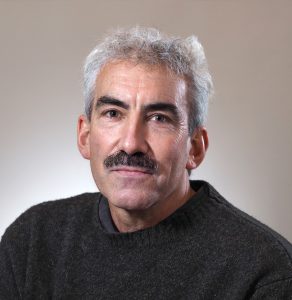
George Loewenstein on Hot and Cold Affect
The idea of walking a mile in someone else's shoes is often trotted out as a metaphor for understanding empathy. The act of imagining someone else's reactions may be hard, but based on the body of work by George Loewenstein, predicting how -- under varying circumstances -- we might walk in our own shoes may not be all that easier. Loewenstein is the Herbert A. Simon University Professor of Econ
Joel Mokyr on Economic Lessons from the Past
"I tell my students, 'If somebody utters the sentence that starts with the words, "History teaches us" the rest of the sentence is probably wrong.' History has no direct lessons for almost anything. Our own age is sufficiently different, sufficiently unique, from what happened in the past that any facile lessons from history are more likely to mislead than to enlighten." That series of caveats c
Karin Barber on Verbal Arts
Verbal arts, explains Karin Barber, emeritus professor of African cultural anthropology at the University of Birmingham, are "any form of words that have been composed in order to attract attention or invite interpretation which is intended to be repeatable in some way." They are, she continues, central to all sorts of social processes, "just as much a part of people's lives as kinship or economi
Melanie Simms on Work
COVID-19 has changed everything, including how we work (and to be more precise, are employed). But in order to best understand how things have changed, and hopefully to grapple with how they will be, it helps to have studied how they were. Enter Melanie Simms, professor of work and employment at the University of Glasgow 's Adam Smith Business School, and the author – in 2019 – of What Do We Know
Jeffrey Ian Ross on Convict Criminology
"Convict criminology," Jeffrey Ian Ross explains in this Social Science Bites podcast, is "a network, or platform, that's united in the perception that the convict voice has been either neglected or marginalized in scholarship or policy debates in the field of criminology in general, and corrections in particular." Ross, a professor in the School of Criminal Justice at the University of Baltimor
Molefi Kete Asante on Afrocentrism
Molefi Kete Asante, the chair of the Department of African American Studies at Philadelphia's Temple University, has long been at the forefront of developing the academic discipline of Black studies and in founding the theory of Afrocentrism, "the centering of African people in their own stories." In this Social Science Bites podcast, Asante offers an insiders view of the growth of the Afrocentri
Jennifer Richeson on Perceptions of Racial Inequality
There is inequality in the United States, a fact most people accept and which data certainly bears out. But how bad do you think that inequality is, say, based on comparing the wealth held by the average Black person in America and the average white person? This is one of the questions that Jennifer Richeson, a social psychologist at Yale University, studies. She has news -- bad news -- about bo
Jennifer Lee on Asian-Americans
The twin prods of a U.S. president trying to rebrand the coronavirus as the 'China virus' and a bloody attack in Atlanta that left six Asian women dead have brought to the fore a spate of questions about Asian Americans in the United States. Columbia University sociologist Jennifer Lee has been answering many of those questions her entire academic career, and across four books, dozens of journal
Martha Newson on Identity Fusion
Despite being someone who doesn't "particularly enjoy the game," cognitive anthropologist Martha Newson is drawn to football. "Football is one of the most exciting games to watch as an anthropologist," she explains in this Social Science Bites podcast. "I'm not watching the ball go around the pitch – I'm watching the fans. I'm transfixed by them! You go through all the emotions in a single match.
Olivier Sibony on Decision-Making
When human judgment enters the picture, so too will errors in human judgment. Think of this as "noise," just as you might think of a signal-to-noise ratio in an audio signal. And just as in listening to music, this noise is not a feature, but a flaw. In the context of human action, management professor at HEC Paris and former McKinsey senior partner Olivier Sibony defines "noise" as the unwanted
Whose Work Most Influenced You? Part 4
"That's such a hard question," Gina Neff, a sociologist at the Oxford Internet Institute, responds when asked what social science research or thinker most influenced her. "It's like a busman's holiday for an academic, because so many things have influenced my thinking." Her answer, by the way, was Ulrich Beck's concept of the risk society, as explained in this 1986 book. In this montage drawn from
Jim Scott on Resistance
When Jim Scott mentions 'resistance,' this recovering political scientist isn't usually talking about grand symbolic statements or large-scale synchronized actions by thousands or more battling an oppressive state. He's often referring to daily actions by average people, often not acting in concert and perhaps not even seeing themselves as 'resisting' at all. The 'problem' with political scientist
Michèle Lamont on Stigma
The study of stigma, , says Michèle Lamont, is a "booming field." That assessment can be both sad and hopeful, and in this Social Science Bites podcast the Harvard sociologist explains stigma's manifestations and ways to combat it, as well as what it takes for a researcher to actually study stigma. Lamont defines stigma "as the negative characterization of any social attribute," and offers exam
Diego Gambetta on Signaling Theory
What we tell people about ourselves is not exclusively, or often not even majorly, what comes out of our mouths. A host of nonverbal messages emanate from us, many of them intentionally sent to create or reinforce a narrative for a recipient who is left trying to judge the veracity of the sum total of the information. The study of this signaling in the content of an asymmetry of information is kno
Mike Tomasello on Becoming Human
Consider two different, but similar situations. In the first, children are asked to pull ropes together. Candy cascades down, but in unequal distribution – three for one child and one for the other. In the second situation, the children come across the sweets but without joint labor, and again find an uneven distribution. What usually happens next differs between the two situations. When the kids
Belinda Winder on Pedophilia
Forensic psychologist Belinda Winder, who founded and heads the Sexual Offences, Crime and Misconduct Research Unit at Nottingham Trent University, wants society to understand one key aspect about pedophilia. "Many people understand pedophilia to be both a sexual attraction to children but also the act of committing abuse against children," she explains to interviewer David Edmonds in this Social
Salma Mousa on Contact Theory (and Football)
There's an intuitive attraction to the idea that if we could just spend some quality time with someone from another group, we'd both come to appreciate, and maybe even like, the other person and perhaps even their group. Enormously simplified, that's the basis of contact theory, which Gordon Allport posited in the 1950s as the United States grappled with desegregating its public schools. If differ
Alondra Nelson on Genetic Testing
Sociologist Alondra Nelson calls it "root-seeking" – individuals wanting to know their ethnic background. Knowing who your people were as a way to know who you are verges on being a human need – witness the Hebrew Bible or the carefully tended genealogies of royal houses. In her own seeking, Nelson has studied the rise and use of direct-to-consumer genetic testing as made popular by companies l
Heidi Larson on Vaccine Skepticism
As the toll from the COVID-19 pandemic increased, polling suggests counterintuitively that resistance to a future vaccine has also risen. Anthropologist Heidi J. Larson identified several likely drivers of this, including political polarization, a focus on being 'natural,' the undercurrent of mistrusting the so-called elite. But in this Social Science Bites podcast, she tells interviewer Dave Edmo
Sherman James on John Henryism
Have you always felt that you could make of your life pretty much what you want to make of it? Once I make up your mind to do something, do you stay with it until the job is completely done? And when things don't go the way you want them to, do you just work harder? And one last question – are your poor, or working class, or live in a highly segregated area? If you strongly agree with the first q
Gurminder K Bhambra on Postcolonial Social Science
"I grew up in this country," says Gurminder K Bhambra, a professor at the University of Sussex's School of Global Studies, "and [yet] I always thought I was an immigrant. School told me I was an immigrant; the media told me I was immigrant; everything around me was that I was immigrant. When the Brexit debates were happening, I was talking to my dad about this. He keeps things, so he pulled out hi
Ashley Mears on the Global Party Circuit
It's a scene you might recall from a music video or TV shows where a young alpha male goes to the club with his crew. They're parked at a table, order bottle service while flanked by a bevy of attractive if faceless young women, and after some overindulgence start spraying Cristal like dish soap in a squirt gun. That's life as Ashley Mears documents in a neat little ethnographic study just release
Recommended

Learn 50 English Phrases While You Sleep | Everyday English Phrases & Vocabulary
Dateline NBC

True Crime Classics

Yours Truly Johnny Dollar Collection
Suspense OTR

پلی لیست | PlayList

Crime Stories with Nancy Grace

Conspiracy Files with Paige Carter

Bible Tea

Dark Night Tales with Brian King

Fox news

CBS Radio Mystery Theater | Old Time Radio
